
NYSCA FY2025
Support for Organizations
Supporting Materials for Exhibitions
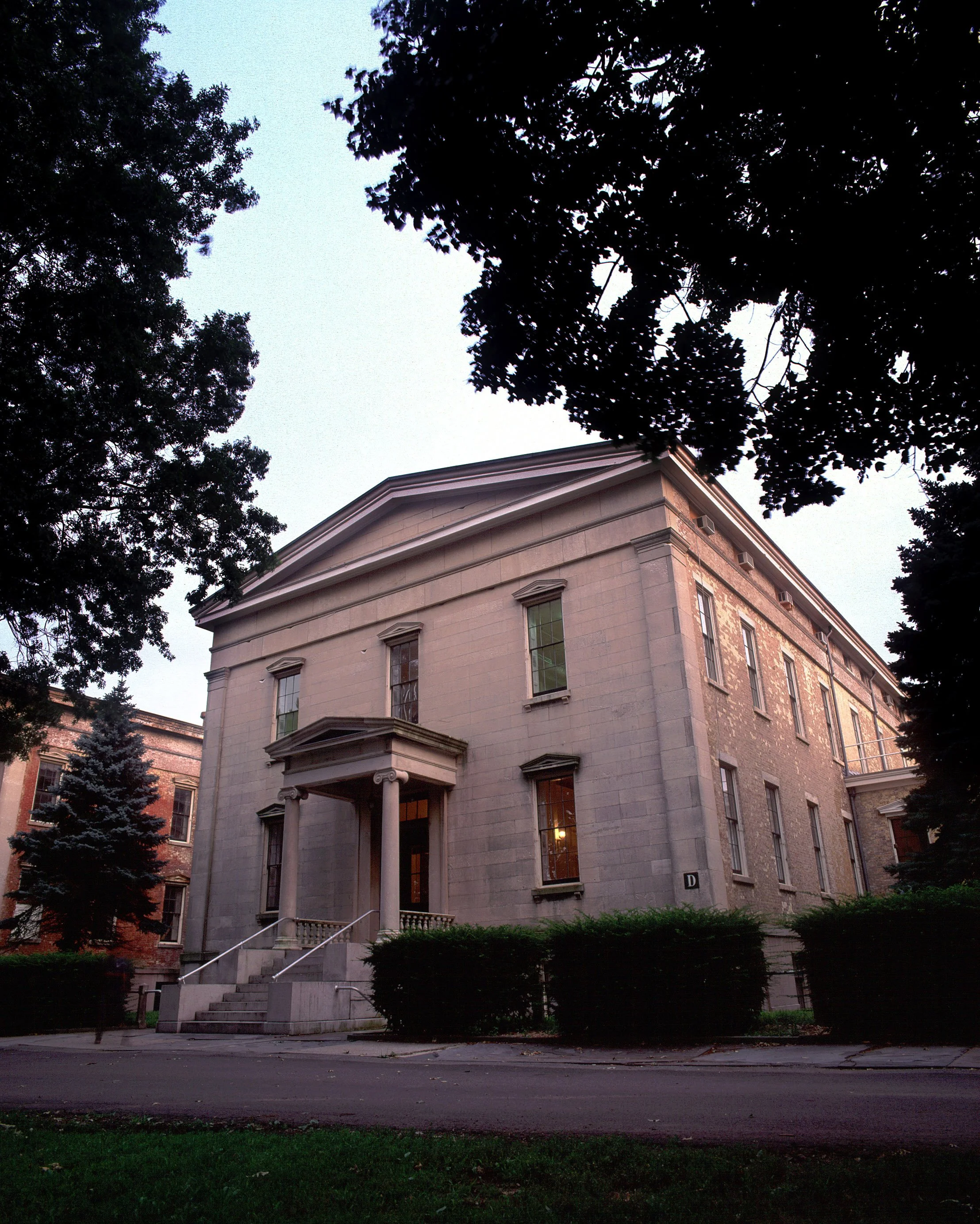
The Noble Maritime Collection is housed in a landmarked, Greek Revival building (at right) which was formerly a Sailors' Snug Harbor dormitory from 1844 to 1976. Below you will find images and additional information about exhibitions about the history of the venerable retirement home for mariners—including an upcoming exhibition that will shed light on new research about the people of color who lived and worked there—and the life and work of the museum's namesake, artist and sailor John A. Noble (1913-1983).
Information about all of the museum's current exhibitions can be accessed via the menu bar above.
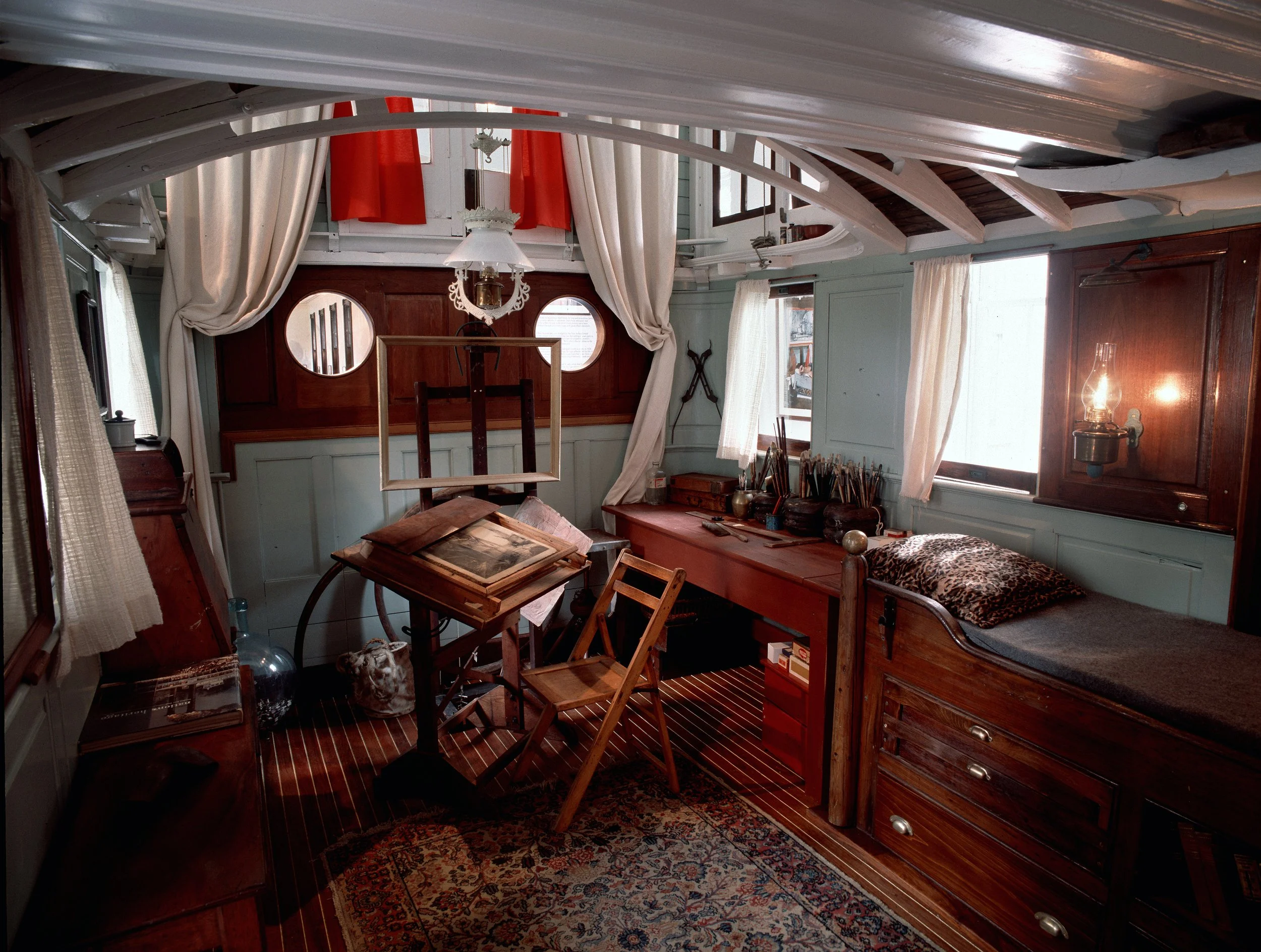
Permanent Exhibition: John A. Noble’s Houseboat Studio
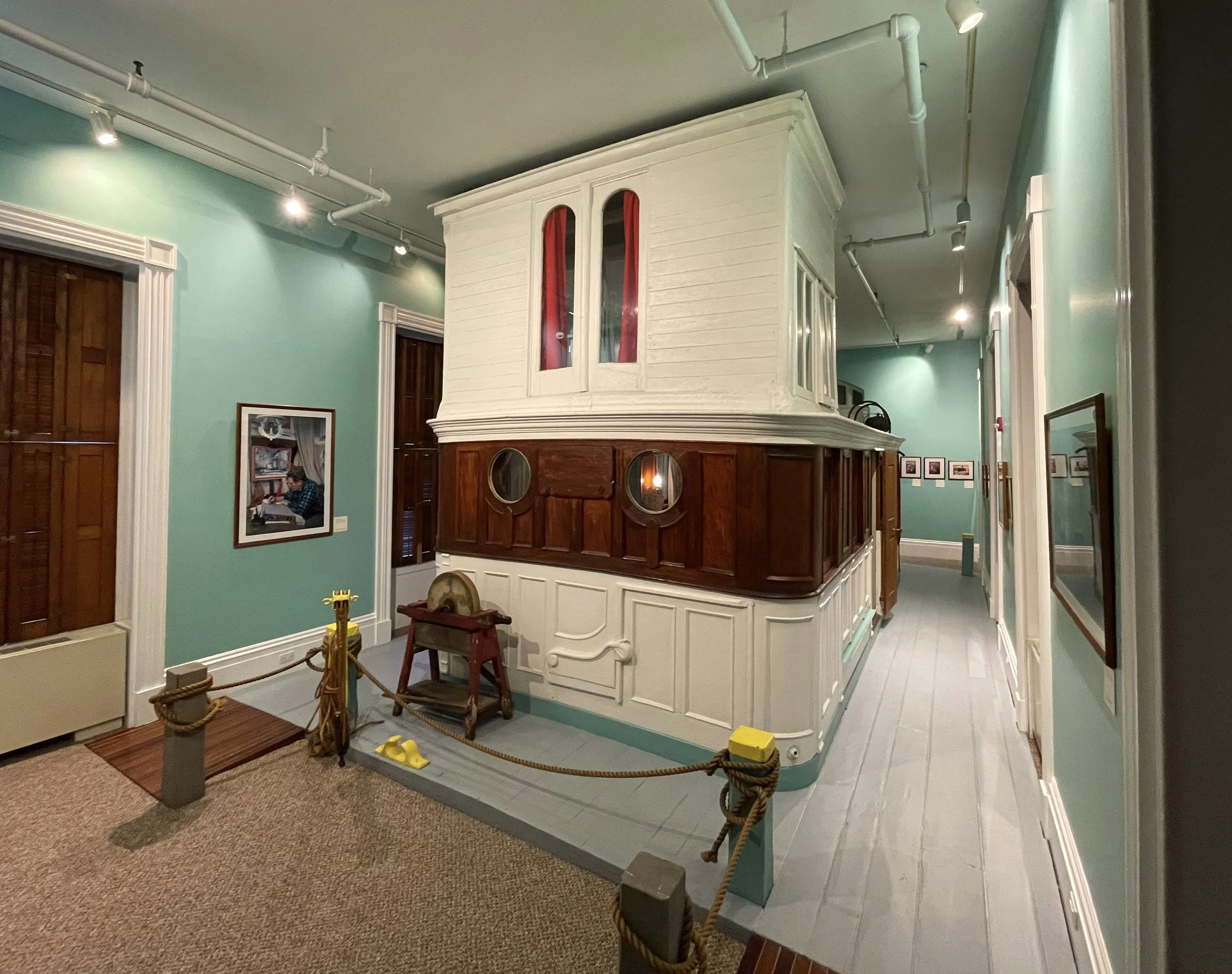
Top: Artist John A. Noble adapted the teak saloon of a 19th-century European yacht for use as his studio, and moored it at Port Johnston in Bayonne, NJ, a boneyard for schooners during the 20th century. Restored in 2000, the houseboat studio is installed inside the Noble Maritime Collection and is the centerpiece of its permanent exhibitions.
Above: The interior of the houseboat studio, restored to its appearance in 1954, when it was featured in National Geographic Magazine.
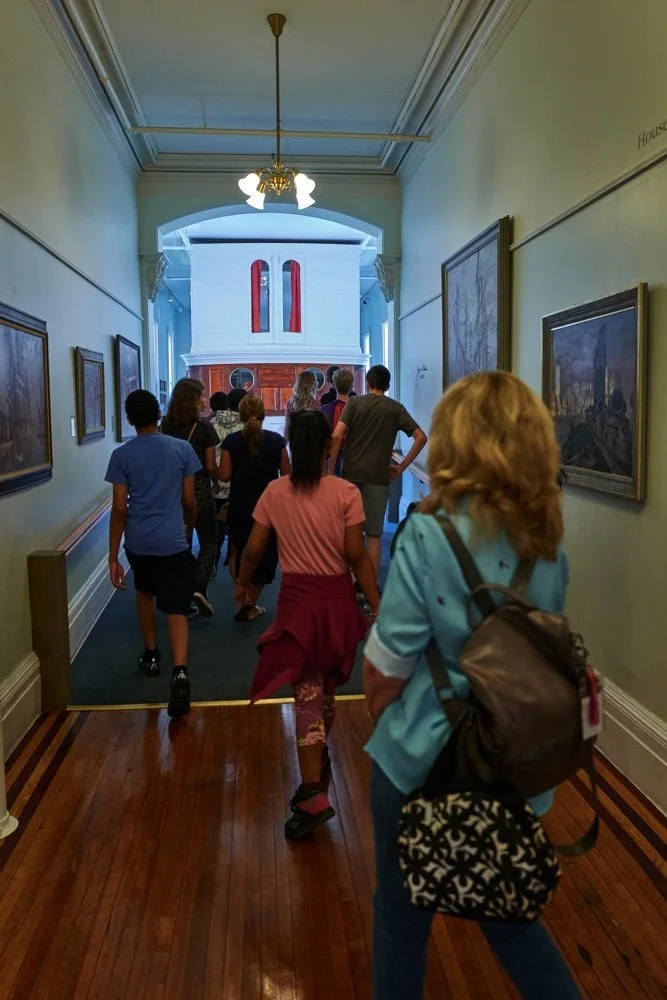
Right: Students and teachers from IS 25 on Staten Island tour Noble’s houseboat studio as part of a school trip.
Permanent Exhibition: Sailors’ Snug Harbor History

Treasures of Sailors’ Snug Harbor showcases the historic 19th-century art and artifact collection of the Trustees of the Sailors’ Snug Harbor in the City of New York.
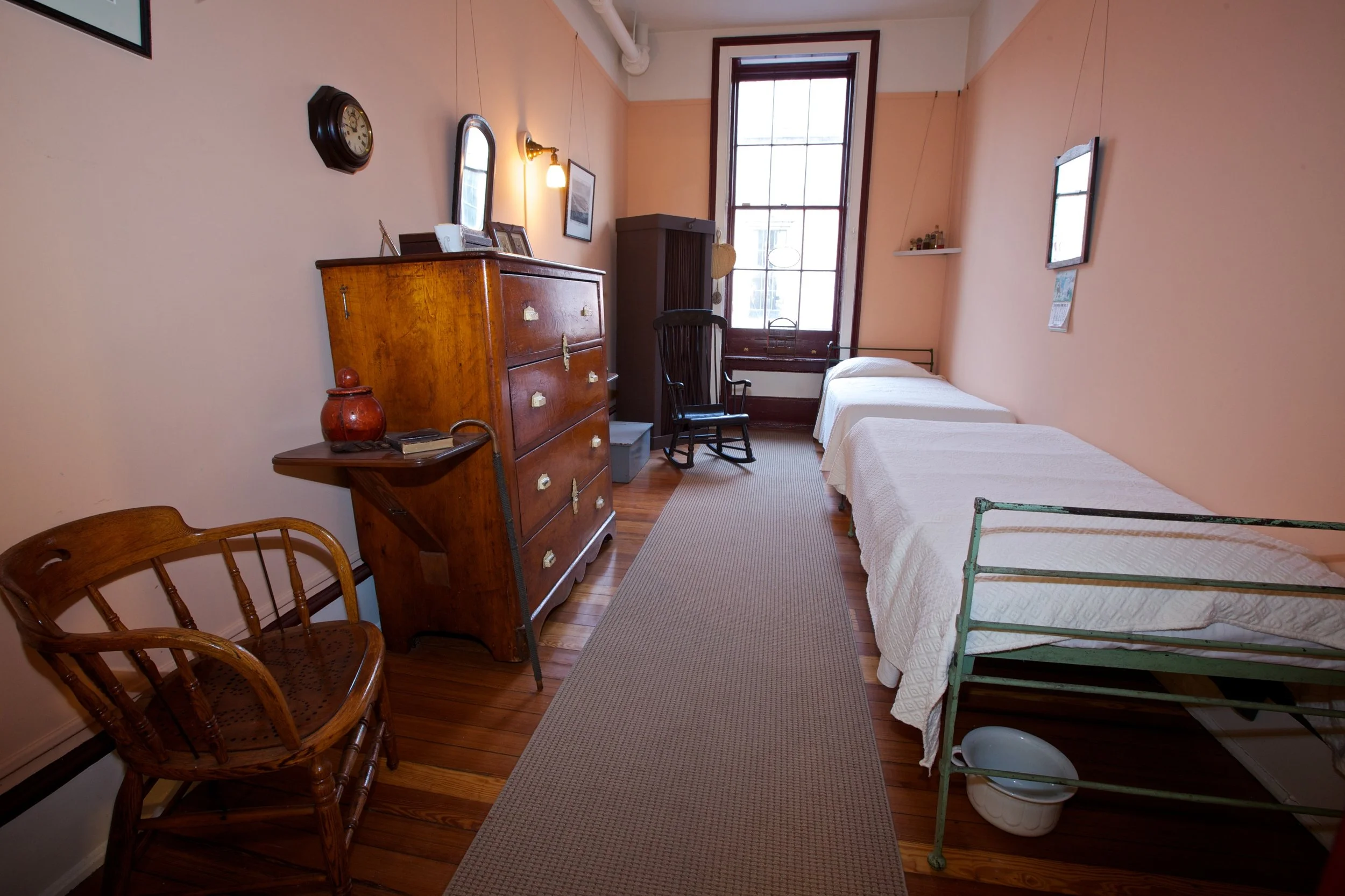
A Dormitory Room is a recreation of a typical bedroom for two sailors. It features original Sailors’ Snug Harbor furnishings from the 19th century.

The Ship Model Gallery features 24 models, including builder’s models, models of famous sailing ships, folk art models, and ships in bottles from the museum’s collection and that of the Collection of the Trustees of Sailors’ Snug Harbor in the City of New York. Some of the models were built by Snug Harbor residents and represent vessels on which they sailed.
New exhibition to tell a more inclusive history of Sailors’ Snug Harbor
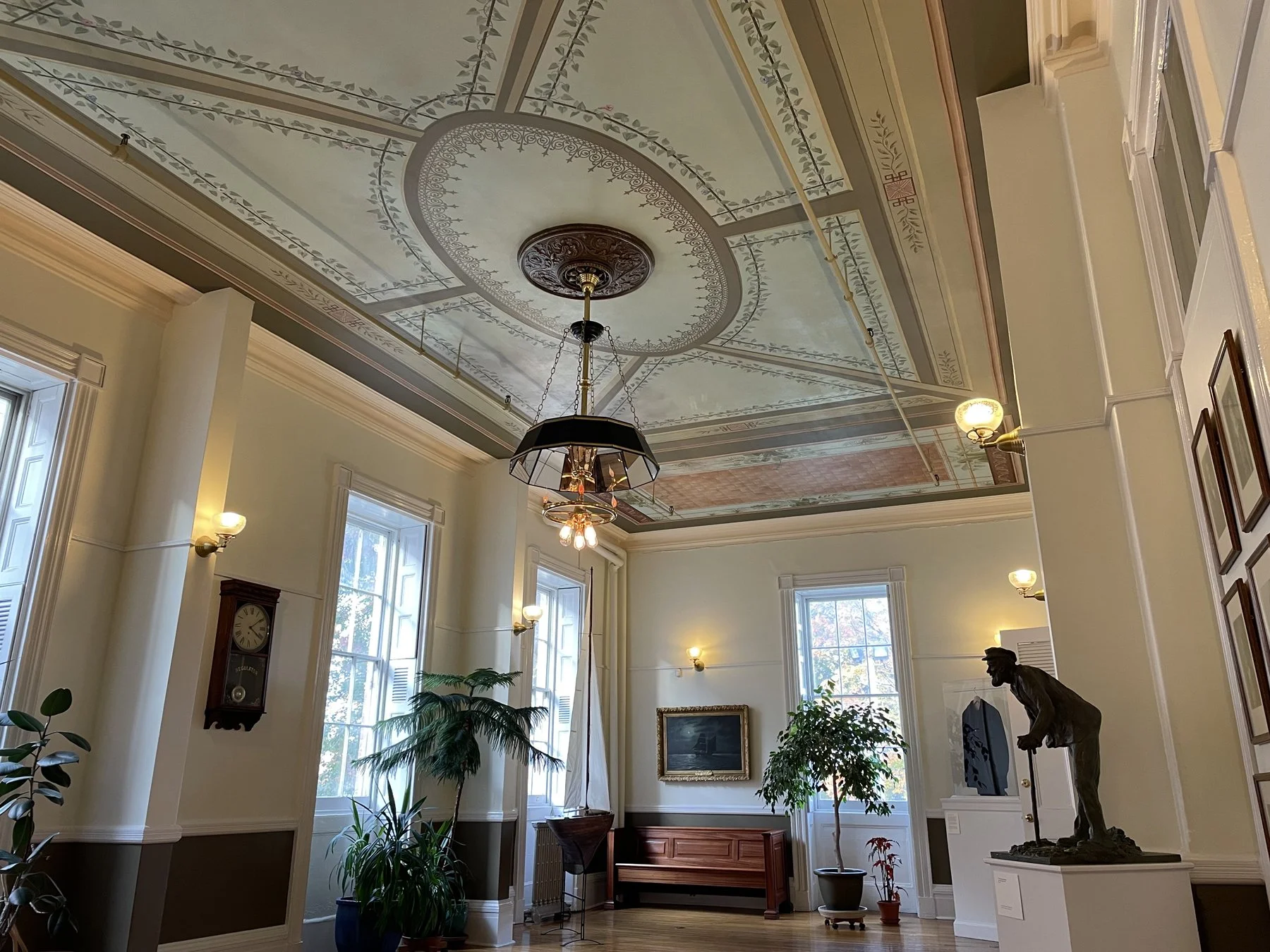
Left, top: The Writing Room, featuring the newly restored Victorian ceiling mural, will be the setting for the museum’s FY25 exhibition, Daily Life at Sailors’ Snug Harbor.
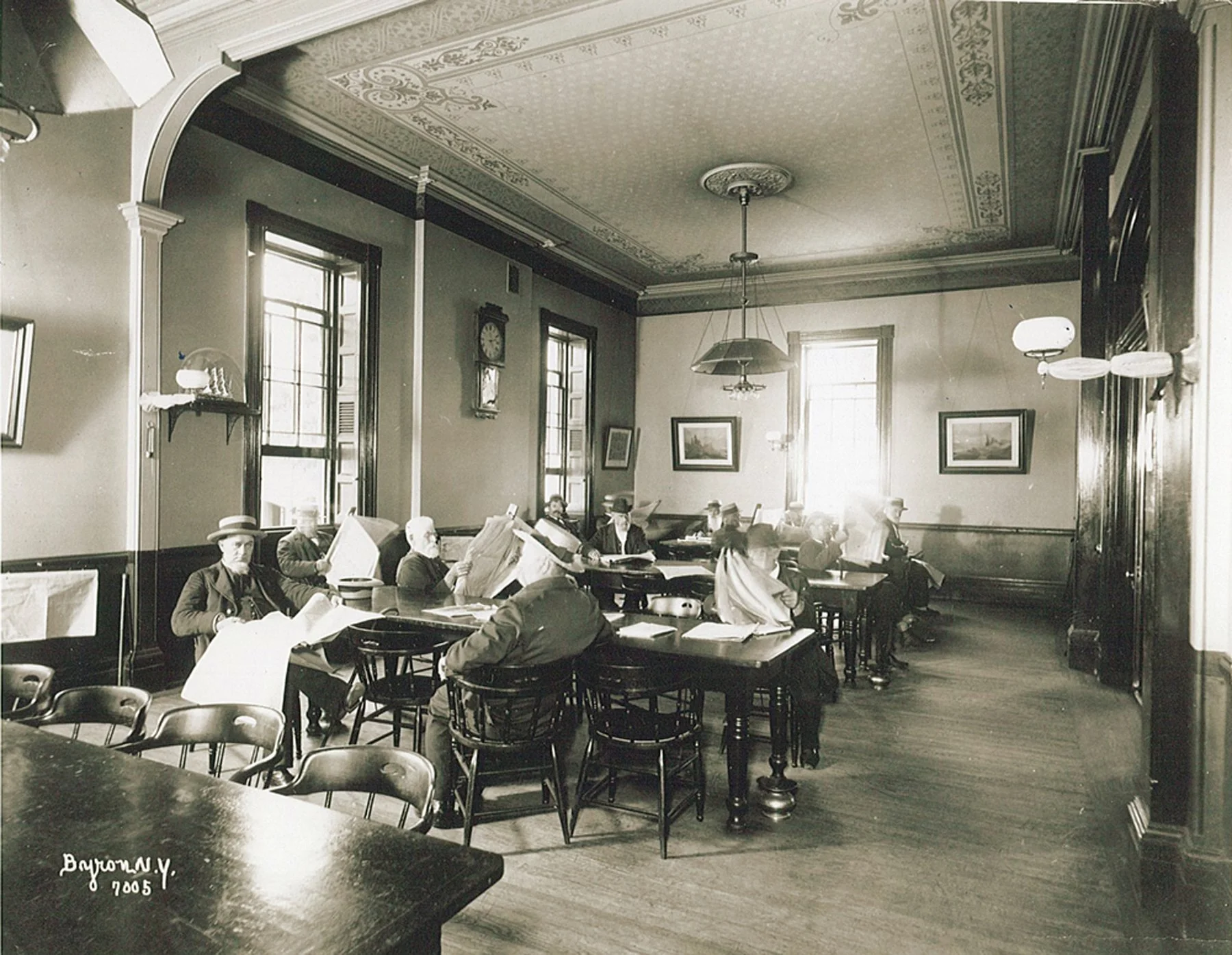
Left, bottom: The Sailors’ Snug Harbor Reading Room in 1899, an amenity similar to the Writing Room, also with a ceiling mural. Photo by the Byron Company
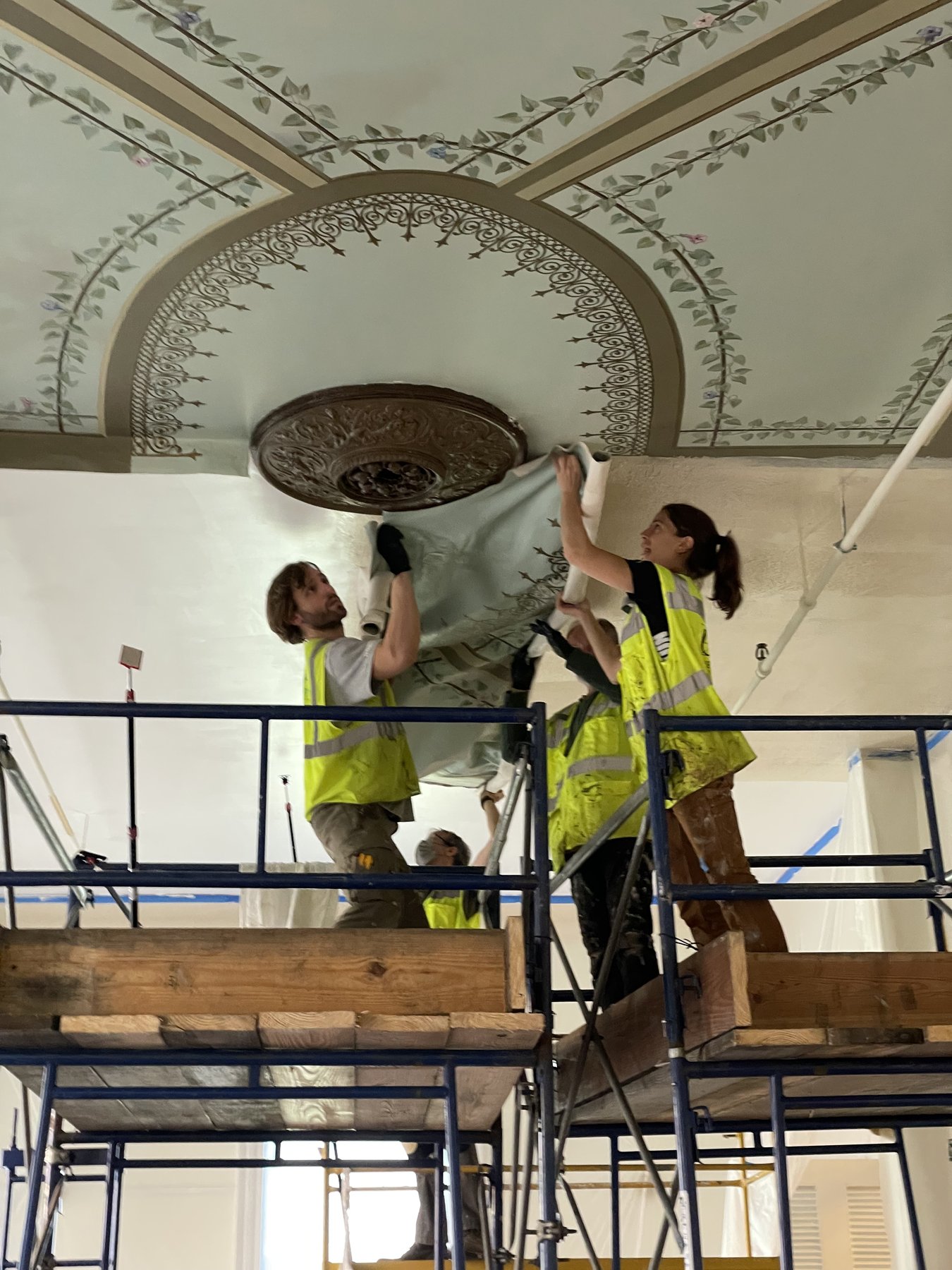
Above: Installation of the ceiling mural canvases by EverGreene Architectural Arts in October 2023.
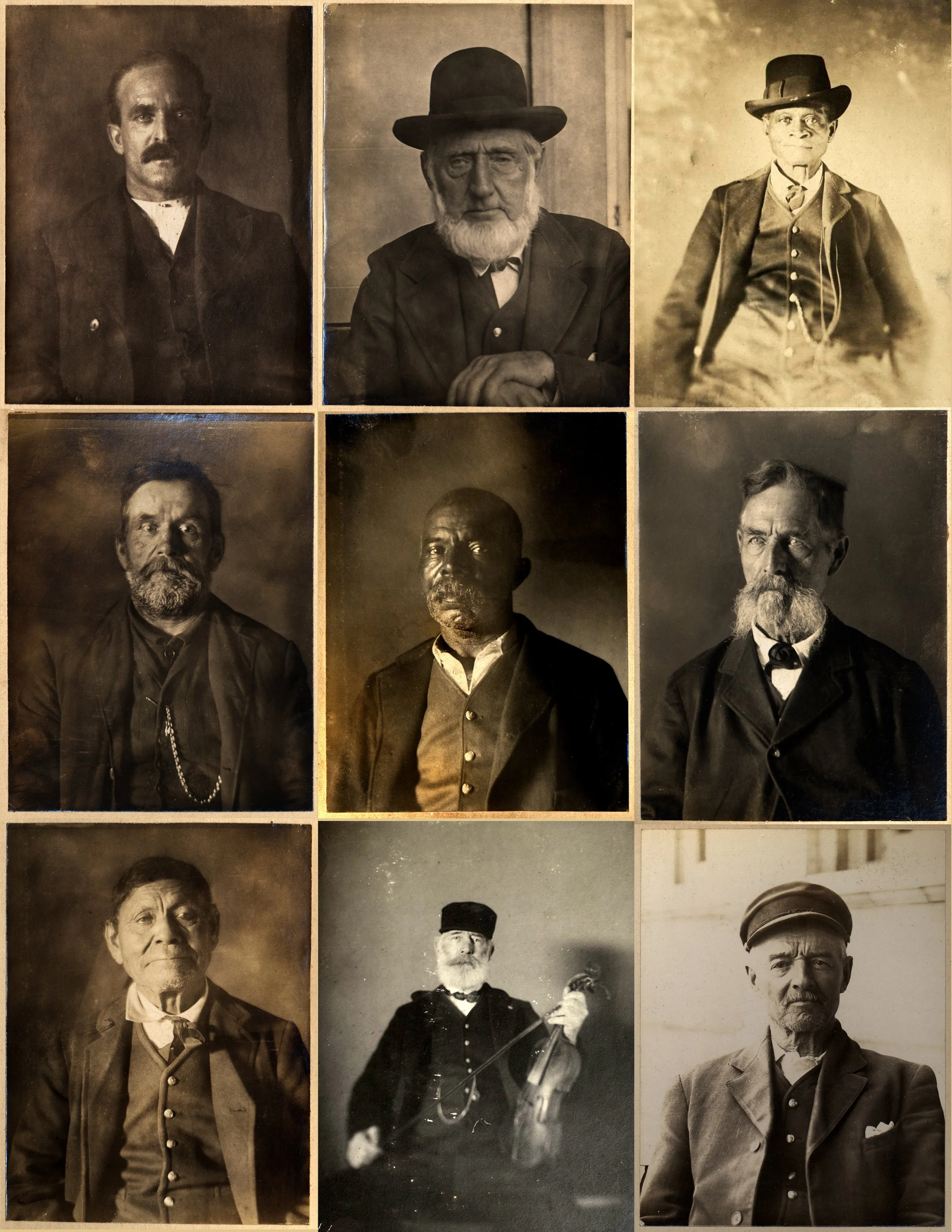
Above and right: The new exhibition will open in May 2025 and will uncover lesser-known narratives about the 19th-century institution, including new research done by Curator Megan Beck about the lives of Black, Indigenous, and Catholic residents and employees. The exhibition will also include sailors’ handicrafts, administrative photographs showing the diversity of residents and employees, and primary source materials such as admission records.
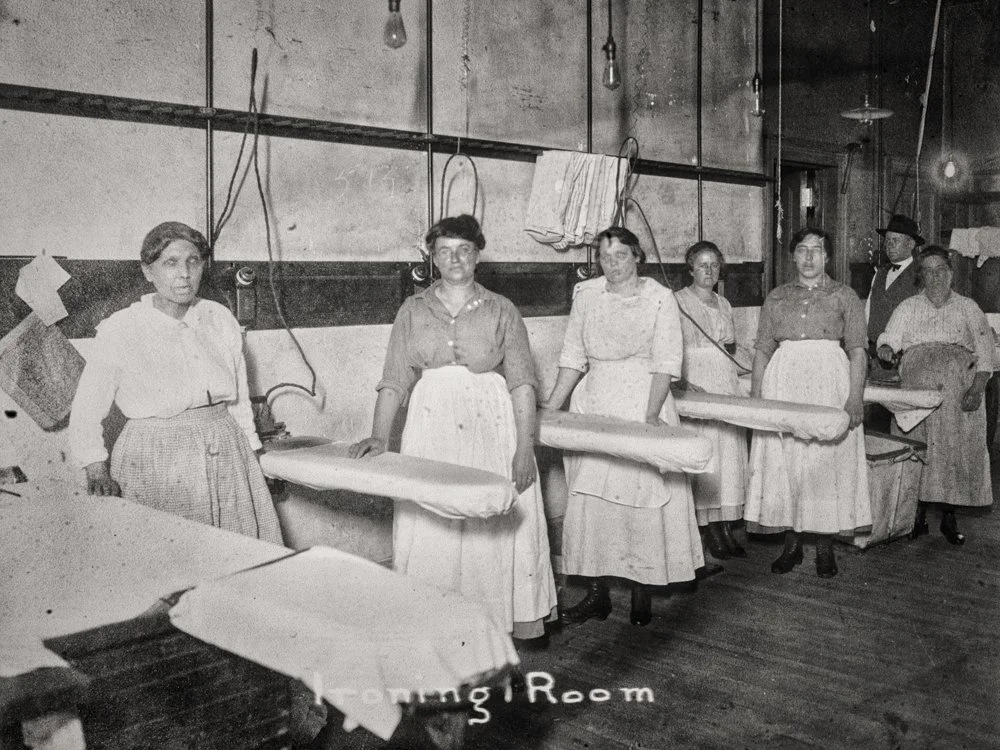
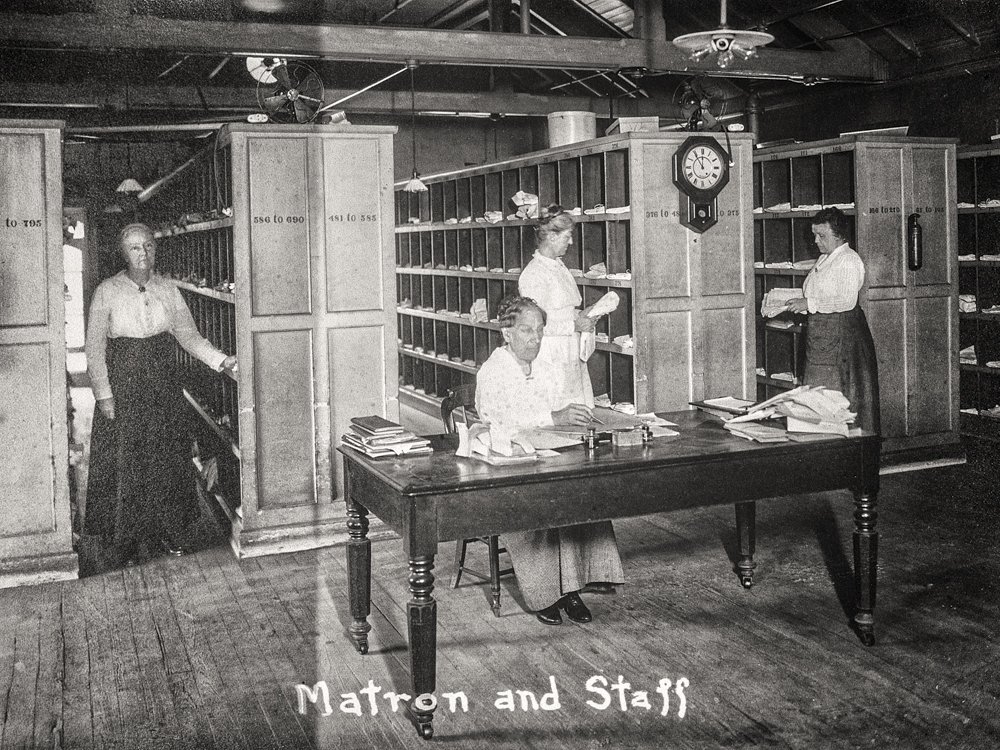
Daily Life at Sailors’ Snug Harbor will open in May 2025 and will present documents and artifacts that recount the process of admission for a typical sailor seeking refuge, and what his life was like as a resident. It will also explore the experiences of those who cared for the sailors, in a myriad of jobs including physicians, pharmacists, and nurses; farmers and gardeners; a commissary, butchers, chefs, bakers, and a food service staff; an eight-man fire brigade; and administrators, including the site Governor, clerks, and the matrons who oversaw the dormitories and hospitals.
Since 2018, Curator Megan Beck has been doing research using primary resources in the museum’s collection and the historic documents collection of the Trustees of the Sailors’ Snug Harbor, held at the Stephen B. Luce Library and the SUNY Maritime College. She has sought to challenge the traditional narrative that all sailors, regardless of identity, were considered equal and treated as such throughout Sailors’ Snug Harbor’s history. Based on this research, significant stories to be explored within the exhibition include:
The admission policies set by the Sailors’ Snug Harbor Trustees regarding the admission of Black sailors (for example, in 1842, a decision was made to admit them on a 1:20 quota of white sailors).
Admission patterns and practices of veterans, formerly enslaved individuals, and denominations other than Presbyterian or Episcopalian, which were the denominations sanctioned by Sailors’ Snug Harbor Trustees, and the notation of race on all admission paperwork and other records.
Sailors’ Snug Harbor’s “taboo” system, a punishment system for rule breaking, which appears to have different standards of behavior and punishment depending on race.
Individuals, such as Captain Gardner Bess, a free Black man, who served as a cook on the USS Octorara from 1862-1865 during the Civil War, and admitted to Sailors’ Snug Harbor in 1876.
This exhibition will contribute to the organization’s trajectory of telling more diverse, inclusive stories. Scholar Dr. Georgette Grier- Key, the Executive Director of Eastville Community Historical Society, a National Trust for Historic Preservation Diversity Scholar & Arcus Fellow, will advise on the interpretive elements of the exhibition, providing subject-matter expertise on reconstructing the Black experience, and the historic life and patterns of the Africa Diasporas of North America, specific to New York maritime history. By developing an expanded and more accurate narrative about the history of Sailors’ Snug Harbor that includes the stories of people of color, the museum’s staff will be starting a discussion that has never happened before about this institution and will serve to further conversations about race and ethnicity in maritime history.
This exhibition will be on display within the museum’s award-winning adaptive-reuse building, which opened in 1844, and is now a New York City Landmark in a National Historic District. During remodeling done in the 1880s to mark Sailors’ Snug Harbor’s 50th anniversary, a trompe-l'œil mural of a glass house roof was added to the Writing Room. The mural was subsequently painted over by Snug Harbor in the early 20th century, and uncovered again under layers of plaster and paint by a coalition of community volunteers called the Noble Crew, which famously restored the building during the 1990s. The mural’s restoration was one of the crowning achievements of the adaptive reuse project. In 2020, due to numerous factors, but primarily because of its age at nearly 180 years, the ceiling collapsed. Thanks to the generosity of The Versailles-Giverny Foundation and The New York Landmarks Conservancy, the Victorian ceiling mural was restored by EverGreene Architectural Arts during a three-year project that was completed in 2023, bringing the Writing Room back to its appearance during the heyday of Sailors' Snug Harbor in the late 19th century. The unveiling of the conserved mural is a part of the larger reinterpretation project of the museum, of which will complement the proposed exhibition.